When a project site cannot accept delivery or floor space runs short, off-site storage becomes a line item in the budget. The question most contractors and manufacturers ask first is straightforward: how much will it cost? The honest answer is that a warehousing quote depends on several separate inputs, not a single price per pallet. Understanding those inputs before requesting a quote helps buyers compare proposals accurately and avoid surprises when the first invoice arrives.
This guide explains the factors that move a commercial warehousing quote in Ottawa. We do not publish rates because every project is different, but we do explain the structure so you can prepare the information a warehouse needs to give you a meaningful number.
Who This Guide Is For
This article is written for contractors, manufacturers, procurement managers and project coordinators in Ottawa and Eastern Ontario who need to budget for off-site storage of project materials, equipment or inventory. It assumes you are storing commercial or industrial goods, not household items, vehicles or personal belongings.
This guide is not for you if:
- You need consumer self-storage for personal items
- You are looking for ecommerce fulfilment or pick-and-pack services
- You need household moving and storage
If you are a general contractor holding materials for a hospital renovation, a manufacturer managing overflow inventory, or an organization storing bulk records, the sections below will help you prepare for a quote conversation.
Why Storage Quotes Vary Between Projects
A warehousing quote is not a single number. It reflects the space your materials occupy, how long they stay, how often they move in and out, and whether you need delivery to site. Each of these factors creates a separate line on the invoice.
Two contractors storing the same number of pallets can receive very different quotes. One may have compact, stackable loads that arrive once and leave once. The other may have oversized crates that require floor space, weekly partial releases, and scheduled deliveries to a downtown site with restricted access. The storage portion might be similar, but the handling and delivery components will not be.
This is why a headline rate means little without context. The warehouse needs to understand your materials, timing and handling requirements before it can quote accurately.
Space Basis: Pallet Positions or Floor Area
Commercial warehouses typically charge by one of two methods:
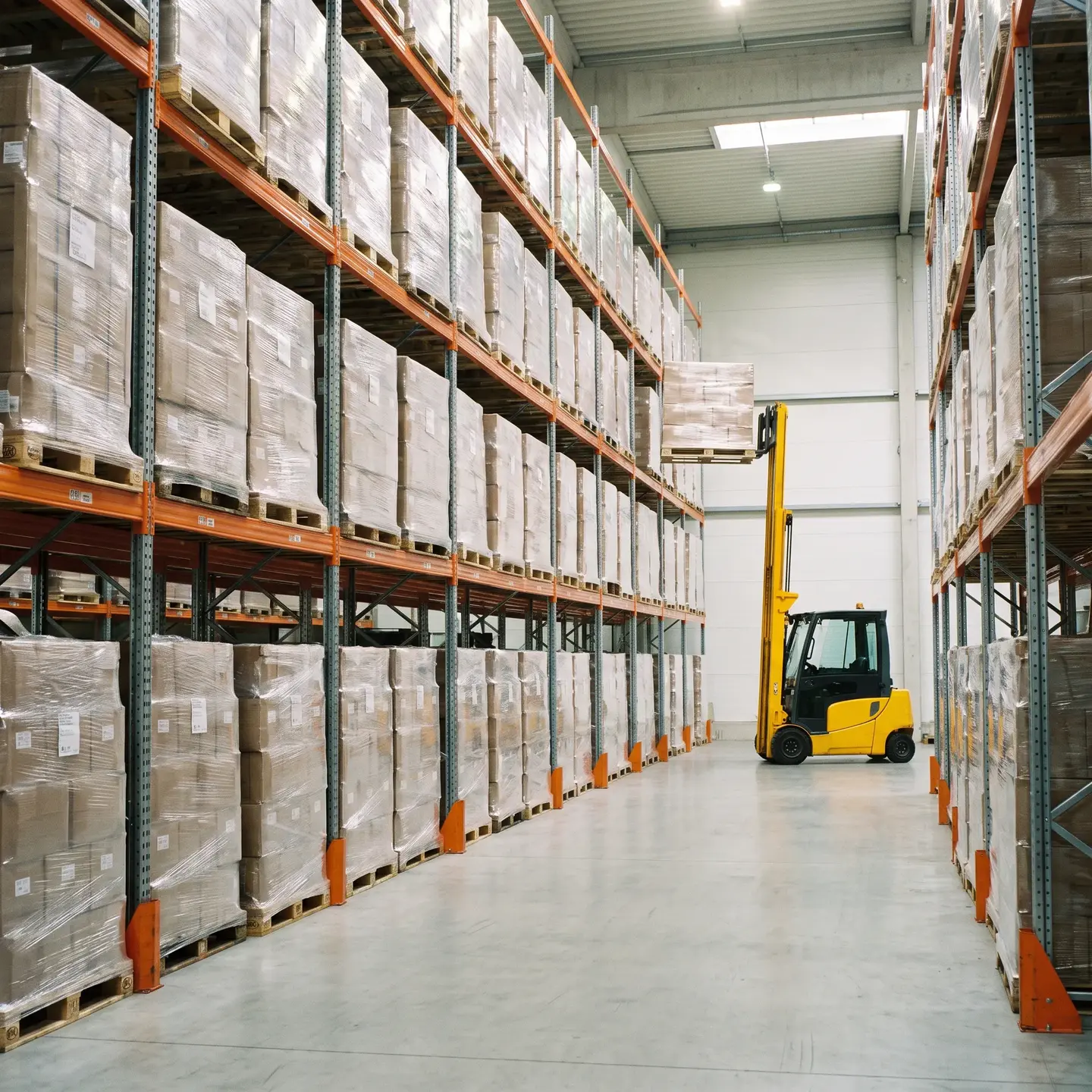
- Pallet positions: Each slot in a racking system holds one pallet. The standard reference footprint in Canada is 48 by 40 inches, as used by pallet poolers like CHEP. If your loads fit this footprint and standard height limits, pallet-position billing is straightforward.
- Square footage: Floor space works better for bulk materials, oversized items, machinery, or goods that cannot be racked. You reserve an area measured in square feet, and the rate reflects the floor space plus access and equipment needs.
Several factors affect which method applies and how many positions or how much area your materials need:
- Load dimensions: Overhang, length, width and height all matter. A load that exceeds the standard pallet footprint may occupy multiple positions or require floor storage.
- Weight: Heavy castings, steel, stone or equipment may exceed rack capacity and need floor storage or reinforced racking.
- Stackability: Stable, identical loads that can be safely stacked use less area. Fragile, irregular or do-not-stack items consume the full height above them.
- Segregation requirements: If materials must be separated by project, floor, work package or purchase order, they cannot be consolidated into dense storage lanes.
The Canadian Centre for Occupational Health and Safety notes that safe storage layouts require aisles and equipment clearances, so the product footprint is never the same as the total floor area a storage plan uses.
When preparing your quote request, measure or estimate the length, width, height and weight of your loads. Note whether they can be stacked and whether different items must remain separated.
Duration and the Minimum Term
Storage charges accumulate over time. A longer commitment may help with capacity planning, but dormant inventory that sits for years can attract different treatment than active project materials.
Key duration factors:
- Minimum term: Most commercial warehouses have a minimum storage period. In our case, the minimum is one month. Goods that leave after two weeks are still billed for the full month.
- Billing cycle: Some warehouses bill by the calendar month, some by half-month increments, and some by a daily or weekly average. Ask how partial months are handled, especially if your materials arrive mid-month.
- Peak versus average: If your inventory jumps from 40 pallets to 250 pallets before an installation window, the warehouse must reserve capacity for the peak, not just your average.
Storage periods vary widely from one project to the next. Provide the earliest and latest expected release dates so the warehouse can plan.
Handling In and Out: Receiving, Moves and Releases
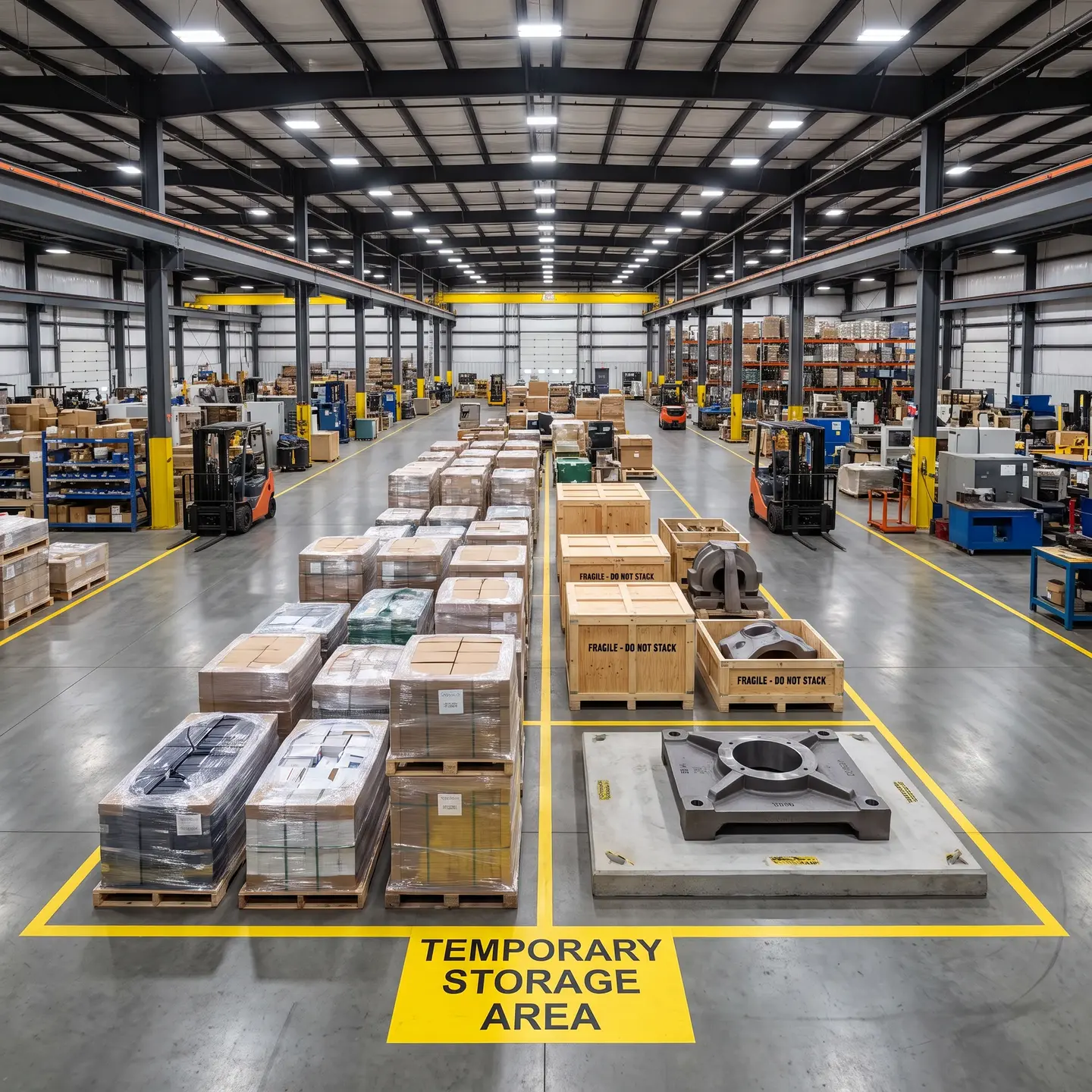
Storage and handling are separate charges. Every time a pallet enters the warehouse, someone must unload it, inspect it, put it away and record it. Every time a pallet leaves, someone must retrieve it, stage it and load it. This labour and equipment use is not included in the storage rate.
Handling charges typically cover:
- Inbound handling: Unloading from the truck, inspecting, documenting and putting away
- Outbound handling: Retrieving, staging and loading onto the outbound vehicle
- Relocations: Moving materials within the warehouse for counts, kitting or staging
The CCOHS guidance on forklift loading and unloading explains how load size and balance affect handling effort. Heavy, awkward or top-heavy loads require more time and sometimes larger equipment.
Factors that increase handling costs:
- Loose materials that need repalletizing
- Mixed-SKU pallets that need sorting
- Missing or incompatible labels that need replacement
- Damage inspection, photography or serial-number capture
- Creating kits or staging materials by room, floor or crew
- Multiple partial releases instead of a single full-lot shipment
A contractor who receives 100 pallets in one shipment and releases them in one shipment will pay less in handling than a contractor who receives 100 pallets in ten deliveries and releases them in twenty partial orders.
If your project requires frequent releases, build that frequency into your quote request. The warehouse can then show you how handling adds up over the project life.
Scheduled Delivery to Site
Storage solves the problem of holding materials until the site is ready. Delivery solves the problem of getting them there on time.
We provide scheduled pickups, deliveries and material releases between Toronto and Montreal. This service is separate from storage and handling. The delivery component of your quote depends on:
- Distance: Kilometres from the warehouse to your site
- Vehicle requirements: Flatbed, enclosed, liftgate or other equipment
- Site constraints: Downtown restrictions, crane windows, limited unloading times
- Waiting time: If the driver must wait for site access, that time is billable
- Frequency: A single delivery costs less per trip than ten scheduled releases over three months
Project storage often involves timed releases to match installation sequences. If your flooring must arrive Monday, your fixtures Wednesday and your equipment Friday, the delivery schedule becomes part of the quote.
Other Factors That Can Affect Your Quote
Beyond space, duration, handling and delivery, several other factors may appear on a commercial warehousing quote:
Temperature and Environment
Ambient storage in a dry, unheated space costs less than climate-controlled storage. If your materials must remain above freezing, stay within a temperature range, or avoid humidity, the warehouse must provide monitoring and energy. Ottawa winters average around minus 10 degrees Celsius in January, so freeze protection is a real requirement for temperature-sensitive goods.
Security and Controlled Goods
Standard commercial warehousing includes restricted access and CCTV. If your materials are high-value, government-owned or fall under the Controlled Goods Program, additional security measures may apply. Our 1255 Humber Place location is registered under the Controlled Goods Program, which supports contractors working with defence and controlled items.
Hazardous Materials
Paint, solvents, adhesives, aerosols and other hazardous products require disclosure, segregation and compatible fire protection. If you are storing chemicals, supply safety data sheets and quantities with your quote request.
Inventory Records and Reporting
Basic inventory totals are simpler than project-level tracking, lot and serial control, or integration with your own systems. If you need detailed reports or multiple inventory statuses, describe your requirements upfront. Our inventory management services support material tracking and controlled releases for project work.
Access Hours and Urgency
Standard operating hours allow for planned pickups and releases. Same-day requests, weekend access or after-hours retrievals require labour outside the normal schedule and may carry additional charges.
What to Send With a Quote Request
A useful quote request includes enough detail for the warehouse to estimate space, handling and delivery accurately. The more complete your information, the more accurate the quote.
Checklist for your quote request:
- Material list: Describe each item type, including dimensions (length, width, height), weight and pallet configuration
- Stackability: Note which items can be stacked and to what height
- Quantity: Provide the expected average and peak number of pallets or square feet
- Timeline: Include the earliest receipt date, expected duration and latest release date
- Inbound frequency: How many deliveries will arrive, and over what period
- Release pattern: Will materials leave in one shipment or multiple staged releases
- Site delivery: Where materials must go, vehicle access constraints and any timed delivery windows
- Special requirements: Temperature control, hazardous materials, security needs, segregation by project or floor
- Reporting: What inventory records, reports or documentation you need
If you have safety data sheets for chemicals or specifications for controlled goods, include them. If materials arrive from multiple suppliers on different dates, provide the schedule.
Common Mistakes to Avoid
Buyers requesting storage quotes sometimes underestimate what the warehouse needs to know. Here are common gaps that lead to inaccurate quotes or surprises later:
- Providing only pallet counts without dimensions: A pallet of lightweight cartons and a pallet of steel plate take different space and equipment
- Ignoring peak inventory: The warehouse must reserve capacity for your busiest period, not your average
- Underestimating handling: Ten partial releases cost more than one full shipment
- Forgetting site constraints: Downtown delivery windows, liftgate needs and waiting time affect the transport component
- Omitting hazardous materials: Discovering chemicals after the quote creates delays and repricing
- Comparing headline rates: A lower storage rate with separate handling, receiving and delivery charges may cost more than a higher rate that includes more services
What to Compare When You Receive Quotes
When quotes arrive, compare them using a sample invoice, not just the storage line. Ask each provider to calculate the total for a normal month and for your peak month, including:
- Storage by pallet or square foot
- Inbound handling
- Outbound handling
- Any receiving, inspection or documentation charges
- Delivery to site
- Minimum monthly charges
- Applicable taxes
This approach reveals the complete cost and prevents surprises when the billing starts.
Next Step: Talk Through Your Materials and Timing
If you have materials arriving before your site is ready, or you need overflow space for inventory and equipment, the next step is a conversation about what you are storing and when it needs to move.
We provide commercial warehousing in Ottawa with indoor, racked, bulk and outdoor yard options. Forklifts from 3,500 to 25,000 lbs handle most materials, and crane support from 12,000 lbs up to 200 ton is available through a partner. Our yard has 24/7 CCTV, an 8-foot barbed-wire fence, lighting and a dispatcher watching the yard during regular hours.
Storage is billed separately from labour and delivery, with a one-month minimum. We handle scheduled pickups and deliveries between Toronto and Montreal.
To discuss your project, contact the Valley Logistics team at 613-744-6444 or info@valleylogistics.ca. Bring your material list, timeline and release schedule, and we will walk through the quote together.
Frequently Asked Questions
What information do we need to provide for an accurate warehousing quote?
A warehouse needs more than a pallet count to prepare a meaningful quote. Provide each item’s length, width, height, weight, pallet configuration and stackability, along with expected average and peak quantities. Also include receipt dates, storage duration, inbound delivery frequency, release schedules, site delivery requirements and any special conditions such as hazardous materials, temperature control, segregation or serial-number tracking.
Why might two projects with the same number of pallets receive different quotes?
Two projects can use very different amounts of warehouse capacity even when pallet counts match. Compact, stable and stackable loads can fit efficiently into racking, while oversized, heavy or fragile materials may require dedicated floor space and wider equipment clearances. Separate project, floor or work-package storage can also reduce consolidation. Safe aisles and access areas must be included in the storage plan, not just the product footprint.
Which warehousing services are separate from the storage charge?
Storage is typically priced separately from inbound handling, outbound handling, internal relocations and delivery. Receiving may include unloading, inspection, documentation and put-away. Releases may involve retrieval, staging and loading. Additional work can include repalletizing, sorting mixed loads, replacing labels, photographing damage, creating kits or preparing partial orders. Listing these activities in advance lets you compare the complete service cost rather than only the storage line.
How do partial releases and scheduled site deliveries affect our quote?
Identify whether your materials will leave as one complete shipment or through staged releases. Each additional release may require retrieval, staging, loading and transportation. Delivery requirements also depend on distance, vehicle type, site access, timed receiving windows, restricted downtown access and driver waiting time. For example, releasing flooring, fixtures and equipment on separate installation dates creates a different handling and delivery plan than one full-lot shipment.
What special requirements should we disclose before storing project materials?
Disclose temperature limits, hazardous products, controlled goods, high-value inventory, segregation rules and reporting requirements before requesting a quote. Safety data sheets and quantities are essential for paints, solvents, adhesives and aerosols. Also explain whether you need lot or serial tracking, project-level inventory reports, weekend access or urgent retrievals. Early disclosure allows the warehouse to plan suitable space, equipment, security and handling procedures.