When a warehouse quotes storage, the price usually comes in one of two forms: a rate per pallet position or a rate per square foot. The difference is not just accounting. It reflects how the space will be organized, how your materials will be handled, and whether the quote actually fits what you are storing. For contractors and manufacturers with mixed project loads, choosing the wrong basis can mean paying for space you cannot use or paying twice for the same awkward item.
Picture a project load that includes boxed electrical components, a few skids of ductwork, and a piece of equipment that weighs 8,000 pounds and cannot be stacked. The answer is rarely one or the other. It depends on the material itself.
Who This Guide Is For
This article is for contractors, manufacturers, and procurement coordinators who need to store project materials off site and want to understand what they are actually buying when a warehouse quotes storage.
This guide is for you if:
- You have materials arriving before your site is ready
- Your loads include a mix of boxed goods, long materials, and heavy equipment
- You need to compare quotes from different providers
- You want to know what information to give a warehouse so the quote fits your project
This guide is not for you if:
- You need consumer self-storage for household goods
- You are looking for ecommerce order fulfilment or pick-and-pack services
- You need vehicle or recreational vehicle storage
Two Ways Storage Space Is Measured
A pallet position is a storage slot sized for a standard pallet. In Canada, the common pallet footprint is 48 by 40 inches, which works out to about 13.3 square feet of floor space. The CHEP Canada 48 x 40 inch pooled wood pallet is a common reference for a standard Canadian pallet.
When a warehouse quotes per pallet position, they are assuming your load fits that slot, including the height and weight limits of their racking. If your pallet is taller, wider, or heavier than the standard, the warehouse may count it as two positions or move it to floor storage.
A square-foot quote reserves or allocates a measured floor area. This might be a dedicated zone for your project, a taped-off staging area, or a section of bulk floor storage. The rate applies to the area, not to the number of items in it.
Neither basis is inherently better. The right one depends on what you are storing and how you need to access it.
When Racked Pallet Storage Tends to Fit
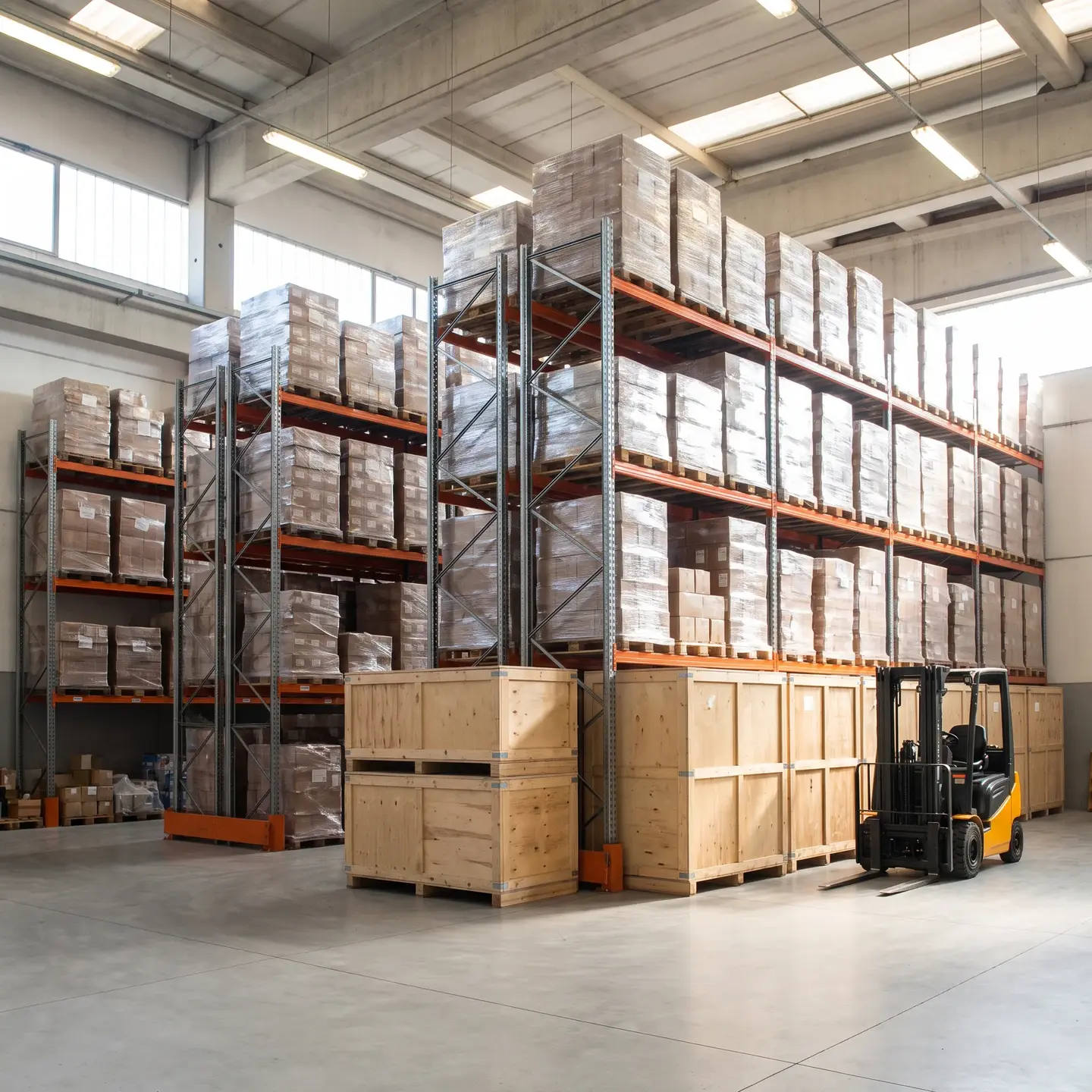
Pallet racking works well for loads that are:
- Standardized: consistent dimensions that fit the rack opening
- Stackable: the product and packaging can bear weight from above
- Rackable: the pallet itself is in good condition and can rest on rack beams
- Variable in quantity: the number of pallets changes month to month
Examples include boxed electrical components, packaged plumbing fittings, bagged materials, drummed products, and cartons of fasteners or hardware. If the load arrives on a standard pallet, stays within the height limit, and can be lifted by a standard forklift, racked storage is usually the most space-efficient option.
Racking uses vertical space, which is why pallet-position pricing often works out lower than reserving the equivalent floor area.
For project storage, pallet pricing also scales with your inventory. If you start with 200 pallets and release half of them to the job site, your storage cost drops. That flexibility matters when delivery schedules shift.
When Floor or Bulk Storage Tends to Fit
Floor storage is the better fit for materials that do not match standard pallet geometry. This includes:
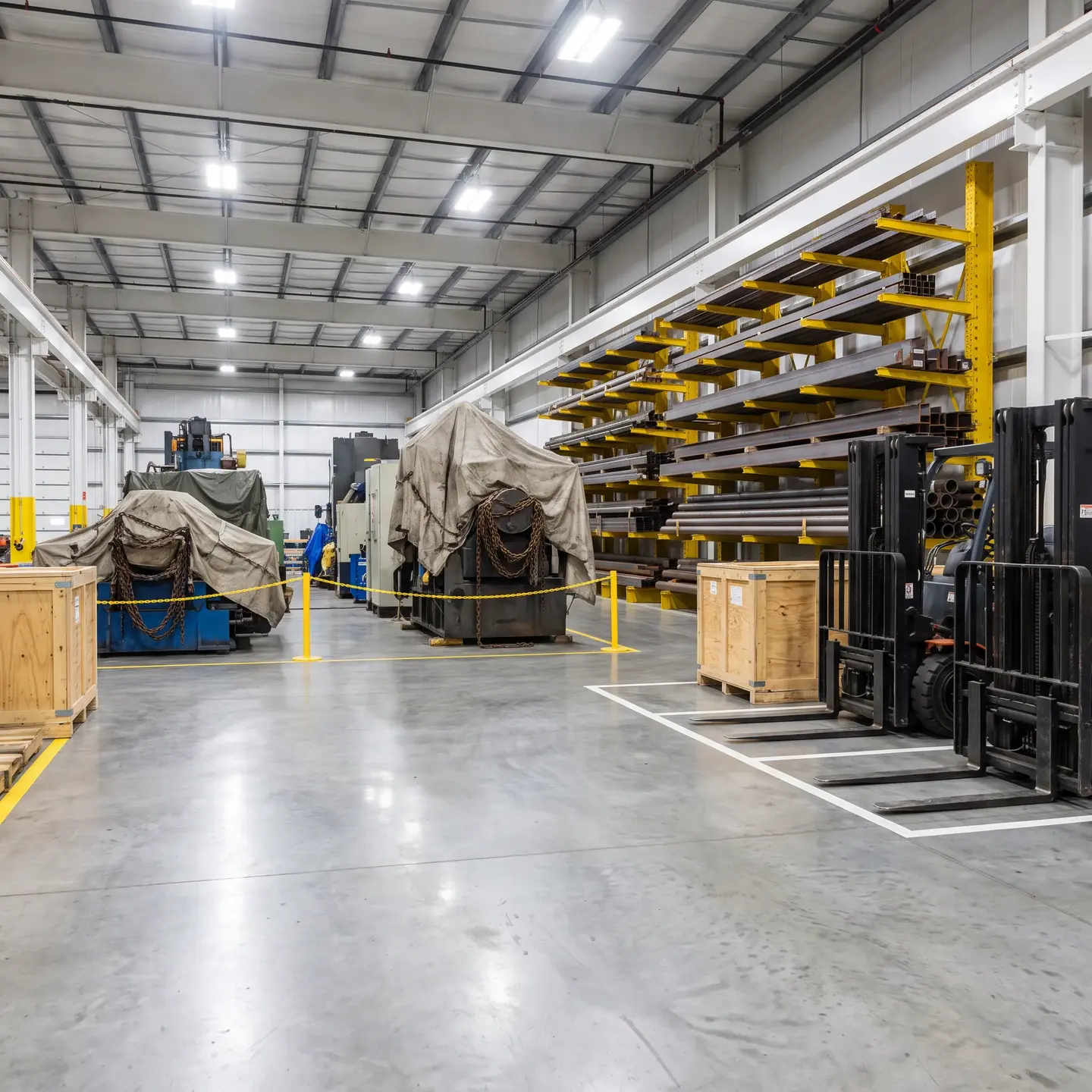
- Oversized items: crates, machinery, switchgear, millwork, or prefabricated assemblies that exceed the rack opening
- Long materials: pipe, tubing, structural steel, bar stock, or lumber that cannot sit on a conventional pallet rack
- Heavy or awkward loads: equipment that needs a forklift with higher capacity or crane support for placement
- Non-stackable goods: items that cannot bear weight from above or that require individual access
- Segregated staging: materials that need a dedicated area organized by floor, zone, trade, or installation phase
Long materials often require cantilever racking, which is a different system from selective pallet racking. Cantilever arms extend outward to support pipe, lumber, and metal sections without vertical posts in the way. If the warehouse does not have cantilever racking, those materials go to floor or yard storage.
For large equipment and machinery, the floor loading also matters. A heavy motor or fabricated skid may exceed the weight a rack can bear, even if the footprint would fit. In these cases, floor storage is the only safe option.
Stackability and What the Surface Can Bear
One of the first questions a warehouse asks about a load is whether it can be stacked. The Canadian Centre for Occupational Health and Safety lists stackability, crushing risk, and surface capacity as basic storage considerations.
Stackability depends on:
- The strength of the packaging or crate
- The product itself (whether it can bear weight without deforming)
- The condition of the pallet
- Manufacturer stacking instructions, if any
If a pallet cannot be stacked, it takes up more space in a rack because the level above it cannot be used. Some warehouses bill non-stackable pallets as two positions. Others move them to floor storage and quote by square foot.
For floor storage, the surface capacity of the floor itself becomes a factor. Concrete floors have load limits. A piece of equipment that concentrates weight on a small footprint may need spreader plates or a specific placement to avoid damaging the floor. This is another reason why heavy equipment often ends up in dedicated floor zones rather than general racking.
Access Frequency and How It Changes the Layout
How often you need to reach a material affects which storage basis makes sense.
For pallets that stay in place for weeks or months and release as full units, standard racking works well. The warehouse receives the pallet, puts it in a slot, and pulls the whole pallet when you call for a release.
For materials that need frequent partial access, the layout changes. If the warehouse must move other pallets to reach yours, or if you need frequent scheduled partial releases, the handling time and cost go up. A dedicated floor zone may be more practical.
Staged project materials often fall into this category. A contractor storing materials for a phased installation may need loads grouped by floor or zone, with releases scheduled by trade. That kind of sequencing is easier to manage in a dedicated area than in scattered rack slots across the warehouse.
If your project requires frequent access or phased releases, make that clear in your quote request. The warehouse can then propose a layout that supports those needs, such as a dedicated floor zone or staging area. Our inventory management services include inventory tracking and reports.
What to Describe in Your Quote Request
The warehouse cannot quote accurately without knowing what they are storing. The more detail you provide, the closer the quote will be to your actual cost.
Include the following in your request:
- Loaded dimensions: length, width, and height of each pallet, crate, or piece of equipment, not just the pallet itself
- Weight: total weight per unit and any concentrated loads
- Stackability: whether each item can be stacked and to what height
- Quantity: number of pallets, crates, or pieces, and whether that number changes over time
- Duration: how long each item will be stored
- Arrival schedule: when loads will arrive and how (palletized, floor-loaded, delivered by your carrier or theirs)
- Release schedule: full-pallet releases, partial releases, phased deliveries, or sequenced by zone
- Special requirements: temperature sensitivity, hazardous classification, controlled goods status, or security needs
The CCOHS guidance on storage layouts notes that safe storage needs aisle and equipment space. The area your product occupies is not the same as the area the storage plan requires. A warehouse builds clearances, aisles, and equipment access into the layout, which is why two quotes for the same material can look different depending on how the provider calculates space.
Mixed Loads: When Both Bases Apply
Most industrial projects involve mixed loads. Some materials fit racking. Others do not. The practical answer is often a hybrid quote.
A hybrid quote might include:
- Per-pallet pricing for standard cartons, packaged components, and rackable goods
- Per-square-foot pricing for a dedicated floor zone holding machinery, long materials, or staged equipment
- Separate handling lines for receiving, inspection, forklift work, or crane placement
This approach avoids paying several pallet-equivalent charges for one large item that does not fit a rack. It also keeps variable pricing for the portion of your inventory that changes month to month.
When you request a quote, ask the provider to show which materials fall under each basis and why. If they propose counting one physical load as multiple pallet positions, ask for the calculation. A clear breakdown helps you compare quotes and understand what you are actually buying.
Our racked and bulk warehousing options are set up to handle both standard pallets and oversized project materials. Not every load fits a rack, and not every project needs a dedicated floor zone. We work through the details with each client.
A Checklist for Deciding the Quote Basis
Use this checklist to guide your quote request:
- Are most loads on standard 48 x 40 pallets within normal height and weight limits? Pallet pricing is likely the better fit.
- Do you have items that exceed rack dimensions, weight limits, or cannot be stacked? Ask for a square-foot option for those items.
- Do you need a dedicated area for staging, sequencing, or trade-specific organization? A floor zone may be more practical.
- Does your inventory quantity change significantly over the project? Pallet pricing scales with volume; reserved floor space may not.
- Will you need frequent partial access or phased releases? A dedicated layout supports that better than scattered rack slots.
- Do you have a mix of standard and irregular materials? Ask for a hybrid quote with a clear breakdown.
What Not to Do
Avoid these common mistakes when requesting storage quotes:
- Do not assume all pallets are the same. Loaded height, weight, and overhang matter. A pallet that looks standard may count as two positions if it exceeds the rack opening.
- Do not overlook handling. Storage is only part of the cost. Receiving, put-away, retrieval, and delivery add up, especially for high-turnover inventory.
- Do not compare headline rates without normalizing. A lower per-pallet rate with aggressive multipliers for oversized loads may cost more than a higher rate with simpler terms.
- Do not leave out the release schedule. A warehouse needs to know how and when materials leave, not just when they arrive.
- Do not forget billing terms. A pallet that arrives mid-month may incur a full month’s charge under some billing methods and a partial charge under others.
Getting the Right Quote for Your Project
The storage basis is not something you pick from a menu. It follows from the material itself: what it is, how it arrives, how long it stays, and how it needs to leave. A warehouse that understands your project can propose the right combination.
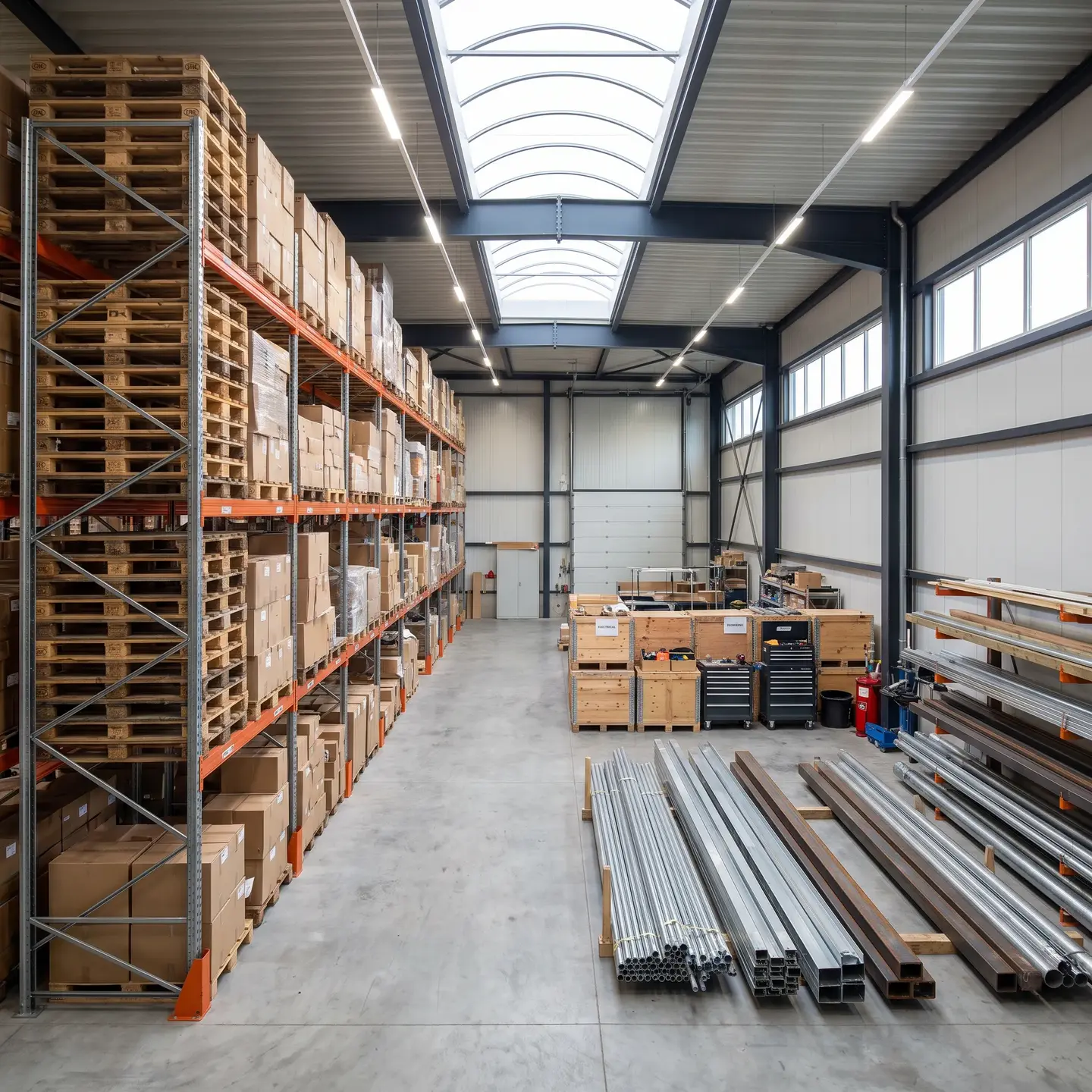
At Valley Logistics, we store and handle materials for contractors and manufacturers across Ottawa and Eastern Ontario. We have racking for standard pallets, bulk floor space for oversized and heavy loads, and outdoor yard storage for contractor materials. Forklifts from 3,500 to 25,000 lbs are available, and crane support from 12,000 lbs up to 200 ton is supplied through a partner. We provide inventory tracking and reports, and we handle scheduled deliveries between Toronto and Montreal.
If you have a project coming up and you are not sure how to describe your storage needs, describe your materials to the Valley team. We will work through the details and put together a quote that fits what you are actually storing.
Frequently Asked Questions
What is the difference between pallet-position and square-foot storage?
We use pallet-position storage for standardized, rackable goods that fit defined pallet slots. Square-foot storage applies to a measured floor area, such as a dedicated staging zone for machinery, long materials, or non-stackable equipment. The choice affects layout, access, and handling. A standard North American pallet is commonly 48 by 40 inches, but loaded height, weight, overhang, and clearance requirements can change how much space your materials actually require.
When is pallet-position storage the better fit for project materials?
We generally recommend pallet-position storage when your materials arrive on standard pallets, can be safely stacked, and are handled as full units. Boxed electrical components, plumbing fittings, bagged materials, drums, and hardware often fit this model. It also suits projects where inventory levels change over time, because releasing half of a palletized load can reduce the number of occupied positions instead of leaving a fixed floor zone reserved.
Which materials usually require floor or bulk storage?
We use floor or bulk storage for items that exceed rack dimensions, cannot be stacked, or create concentrated weight loads. Typical examples include machinery, switchgear, prefabricated assemblies, pipe, structural steel, lumber, and oversized crates. Long products may need cantilever racking, while heavy equipment may require a high-capacity forklift, spreader plates, or specialized placement. Storage layouts must also preserve safe aisles and equipment access.
How does access frequency affect the storage layout?
We plan differently for full-pallet releases than for frequent partial access. Pallets that remain in place for weeks and leave as complete units can be stored efficiently in conventional racking. If your team needs partial or phased releases, or materials grouped by floor, trade, or installation sequence, a dedicated floor zone may be more practical. Include the release schedule in your quote request.
What information should we provide to receive an accurate storage quote?
We recommend providing loaded length, width, height, weight, quantity, stackability, storage duration, arrival method, and expected release schedule. Identify oversized, hazardous, temperature-sensitive, controlled, or security-sensitive goods separately. For mixed loads, request a hybrid quote showing which materials are billed by pallet position, which use floor space, and which require additional receiving, forklift, inspection, or delivery handling.