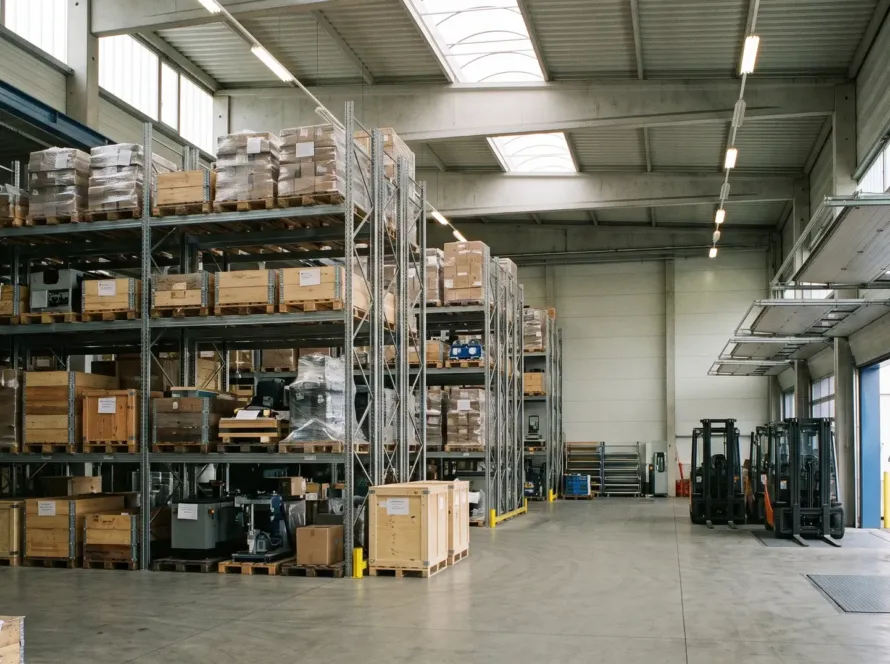
Materials arrive on their own schedule, and that schedule rarely lines up with when a site is ready to receive them. In Ottawa and Eastern Ontario, the window between delivery and installation can stretch across weeks or months of freezing temperatures, snow, and the kind of wet-cold cycles that damage products faster than most people expect. We work with contractors and manufacturers who need to hold weather-sensitive construction materials through the winter, and the questions they ask before storage tell us a lot about whether those materials will be ready for installation when the job calls for them.
This is not a guide for homeowners storing paint cans in the garage. It is written for contractors protecting board, finishes, millwork, packaged equipment, and components that have specific manufacturer requirements and project deadlines attached to them.
Who This Guide Is For
This article is for:
- General and specialty contractors holding materials before a site is ready
- Project managers coordinating deliveries that arrive ahead of schedule
- Manufacturers and distributors staging inventory through the cold months
- Anyone responsible for materials that have manufacturer storage instructions they cannot afford to ignore
This is not for:
- Consumers storing household items
- DIY builders looking for tips on basement storage
- Businesses seeking ecommerce fulfilment or order processing
Why Winter Changes the Storage Question
The difference between a mild October and a cold February is not just temperature. It is the combination of moisture, freeze-thaw cycles, condensation, and extended exposure times that creates problems for weather-sensitive materials.
Canadian winters are not getting simpler. Warmer average temperatures do not mean fewer storage risks. They often mean more variable conditions, including midwinter thaws, rain-on-snow events, and repeated wetting and refreezing. These conditions can be harder on materials than a steady deep freeze.
The practical result is that materials sitting in an unprotected laydown area, an unheated shipping container, or even a covered outdoor space can accumulate damage that is not obvious until installation. By then, the schedule impact and replacement cost are already locked in.
Common Winter Storage Failures
- Freezing of water-based products such as paint, adhesives, and admixtures
- Moisture entering porous materials like gypsum board, insulation, and bagged cement
- Condensation forming when cold materials enter warm, humid spaces
- Freeze-thaw movement affecting foundations under racks and stockpiles
- Cold-related brittleness in membranes, sealants, and adhesives
- Corrosion from moisture, road salt, and prolonged ground contact
Read the Manufacturer’s Storage Instructions First
This step sounds obvious, but it is the one most often skipped or assumed. Every weather-sensitive product has specific storage requirements from the manufacturer, and those requirements are not interchangeable.
A sealant may perform at minus forty degrees Celsius after curing, but still require storage above four degrees and conditioning at eighteen to twenty-four degrees before application. A coating may tolerate outdoor installation in cold weather, but the manufacturer may specify that it cannot be applied to a frost-covered substrate.
The CGC Gypsum Construction Handbook, safety and material handling (Canadian edition) provides a useful example. It specifies that gypsum board should be protected from rain, snow, and direct sunlight, and stored flat. These are not suggestions. They are the conditions under which the product will perform as specified.
Three Temperatures That Matter
For many products, there are three distinct temperature limits:
- Storage temperature: The range the product must stay within while in storage
- Application temperature: The temperature the product and substrate must reach before use
- Service temperature: The range the product can tolerate after installation
Confusing these three limits is one of the most common mistakes. A winter-grade product that can be applied at low temperatures still needs proper storage conditioning first.
Moisture, Snow, and Sunlight: What Exposure Does
Moisture damage is not always visible. Water can enter packaging through small tears, accumulate through condensation, or migrate into porous materials over time. The damage may not show until the material is installed and fails to perform.
The CCOHS: Checklist for stockpiling identifies exposure to temperature, rain, ice, and snow as key storage considerations. It also emphasizes following manufacturer guidelines, which brings us back to the point above.
What Moisture Does to Specific Materials
- Gypsum board: Water staining, softened cores, delamination, and mould
- Bagged cement and mortar: Hydration in the bag, hard lumps, reduced strength
- Wood and mass timber: Staining, mould, warping, dimensional change
- Insulation: Loss of R-value, structural damage to rigid foam
- Finished millwork: Swelling, veneer damage, joint failure
- Electrical equipment: Condensation on internal surfaces, corrosion, insulation tracking
Sunlight is often overlooked as a winter problem, but UV exposure can degrade certain membranes, coatings, and plastics even in cold weather. Products that specify indoor storage or protection from sunlight need that protection year-round.
Packaging Condition at Arrival
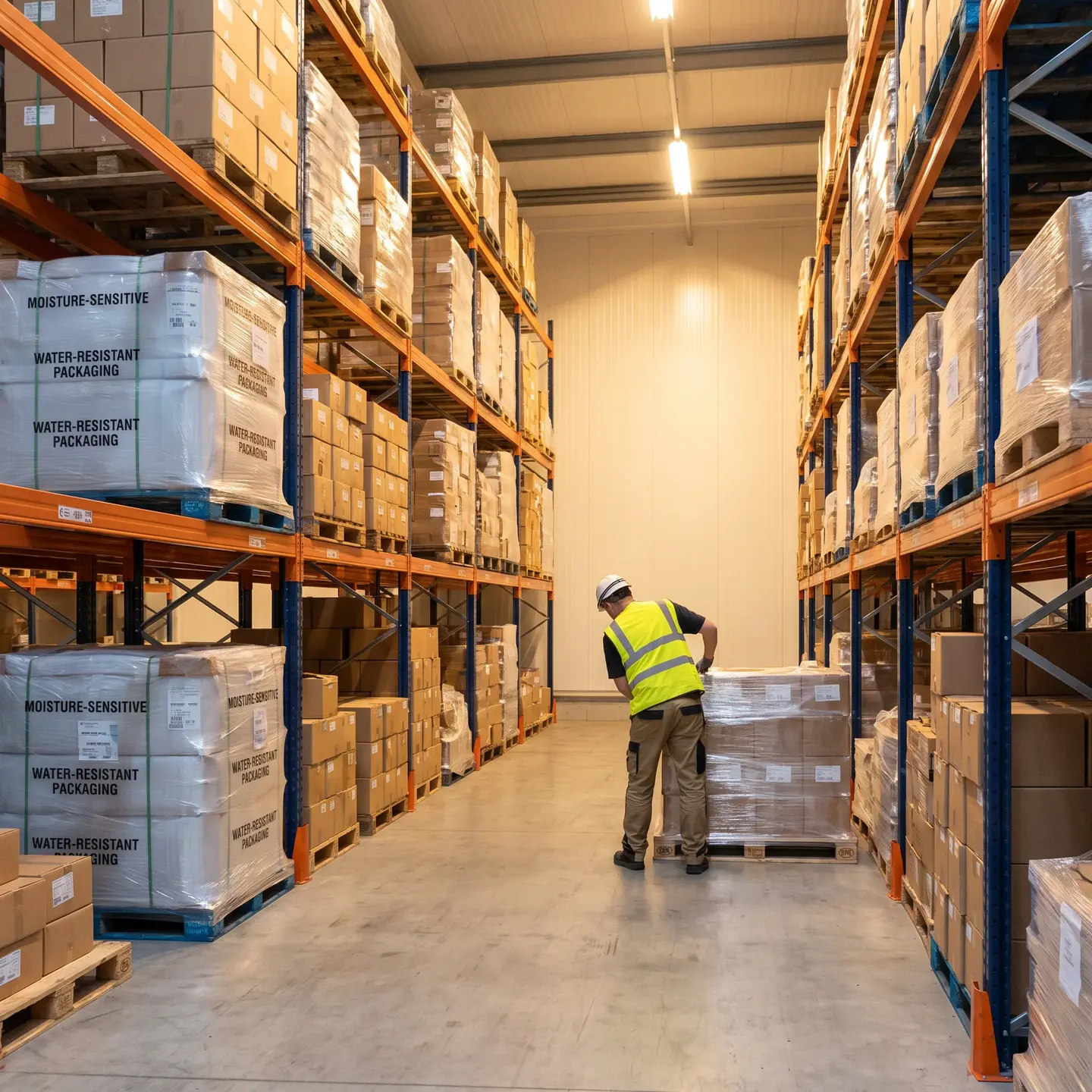
The time to catch a problem is at receiving, not at installation. Every delivery of weather-sensitive material should be inspected before acceptance.
Receiving Inspection Checklist
- Check for ice, water stains, or evidence of water contact
- Look for damaged wrap, torn packaging, or broken seals
- Inspect for clumping, separation, or abnormal consistency in liquids and compounds
- Note any corrosion, rust staining, or coating damage on metal components
- Verify lot numbers and expiration dates
- Photograph any questionable condition before accepting delivery
A delivery that arrives with compromised packaging should be quarantined and documented. The conversation with the supplier is much easier when you have photographs taken at the moment of arrival.
Our inventory management services include receiving inspection and documentation. Knowing what arrived, when it arrived, and what condition it was in is the foundation of any storage program.
Indoor Storage Is Not the Same as Temperature-Controlled Storage
This distinction matters more than most people realize. A material stored indoors is protected from rain, snow, and direct sunlight. But an unheated warehouse or shipping container can still reach temperatures that damage freeze-sensitive products.
What Indoor Storage Provides
- Protection from precipitation
- Protection from direct sunlight
- Protection from wind and airborne debris
- Reduced temperature swings compared to outdoor exposure
What Indoor Storage Does Not Automatically Provide
- Protection from freezing
- Controlled humidity
- Condensation prevention when temperature changes occur
- The specific temperature range a product requires
If a product requires storage above a certain temperature, indoor storage alone is not enough. The storage location must actually maintain that temperature, which requires heat, monitoring, and in some cases backup systems.
Our indoor warehousing in Ottawa provides dry, enclosed storage for materials that need protection from the elements. For products with specific temperature requirements, we can discuss what options are available for your materials.
Questions to Ask a Storage Provider Before the Cold Arrives
If you are considering off-site storage for weather-sensitive materials, there are practical questions to ask before the first frost.
Storage Environment
- Is the storage indoor, outdoor, or a combination?
- What is the minimum temperature the storage area maintains?
- Is humidity controlled, or just temperature?
- What happens during a power failure or heating system failure?
- Are there monitoring systems that track conditions?
Handling and Access
- What lifting equipment is available, and what are the capacity limits?
- Can materials be received quickly when deliveries arrive ahead of schedule?
- Can storage space expand or contract as the project changes?
- What is the process for scheduled releases and deliveries?
Documentation
- Will you receive receiving reports and condition documentation?
- Can you track what is stored and when it was released?
- What records are available for insurance or project documentation purposes?
A storage provider that cannot answer these questions clearly is not ready to protect your materials.
Planning Releases Around Winter Site Conditions
Getting materials out of storage is only half the problem. If they arrive at a site that is not ready to receive them, you have just moved the exposure risk from one location to another.
Site Readiness Considerations
- Laydown area condition: Is the receiving area drained, compacted, and clear of snow and ice?
- Enclosure status: Is the building enclosed enough to protect materials after delivery?
- Heating status: Is the building heated to the temperature the materials require?
- Access routes: Can delivery vehicles reach the unloading point safely?
- Crew availability: Is there labour available to receive, inspect, and place the materials?
The IHSA: Housekeeping and material storage (O. Reg. 213/91 summary) provides Ontario-specific guidance on safe material storage at construction sites. While this is safety-focused rather than product-protection focused, the underlying point applies: material that arrives at an unprepared site creates problems.
Scheduled material releases, coordinated with site conditions, reduce the risk that materials sit exposed at a jobsite waiting for the next trade. This is one of the reasons we provide scheduled deliveries and releases between Toronto and Montreal, so materials move when the site is ready for them, not when the original shipping schedule dictates.
A Practical Pre-Winter Storage Checklist
Before the cold weather arrives, contractors and project managers should be able to answer these questions about every weather-sensitive product:
What is the manufacturer’s storage temperature range? – Specific minimum and maximum from the current product data sheet
Does this product freeze? What happens if it does? – Clear yes or no, plus written reconditioning procedure if applicable
What moisture and humidity requirements apply? – Specific limits from the manufacturer, not assumptions
Where is this product currently stored? – Specific location with known temperature, humidity, and protection
What happens if the storage environment fails? – Alarm, response procedure, and backup plan
How will we verify condition before installation? – Documented inspection procedure with acceptance criteria
If you cannot answer these questions for a product, the inventory is not winter-ready, regardless of where it is stored or what covers it has.
The Real Question
The correct question before winter is not whether you have enough tarps or whether the shipping container is locked. It is whether you can demonstrate that every lot remained within its manufacturer’s storage envelope from fabrication through installation.
That demonstration requires knowing what the requirements are, storing materials in conditions that meet those requirements, monitoring those conditions, documenting receiving and releases, and coordinating deliveries with site readiness.
For contractors and manufacturers in Ottawa and Eastern Ontario holding materials through the winter, this is not extra paperwork. It is the difference between materials that install correctly and materials that create problems, delays, and replacement costs.
If you have materials arriving before your site is ready and need to understand your storage options, ask the Valley team about your materials. We can discuss what you are storing, what the requirements are, and what makes sense for your project.
Frequently Asked Questions
How do we protect weather-sensitive construction materials during an Ottawa winter?
We begin with the manufacturer’s storage requirements for each product, including storage, application, and service temperatures. Indoor storage protects materials from snow, rain, wind, and sunlight, but an unheated warehouse may not prevent freezing or condensation. We assess products such as gypsum board, adhesives, coatings, millwork, insulation, and packaged equipment individually, then match them with suitable handling and storage conditions.
Is indoor storage enough for materials that can freeze?
Not necessarily. Indoor storage reduces exposure to precipitation and sunlight, but it does not automatically provide temperature control, humidity control, or protection during power or heating failures. We review the product data sheet to identify minimum storage temperatures and conditioning requirements. For freeze-sensitive products such as water-based coatings, adhesives, and admixtures, we also consider monitoring, response procedures, and the time required to condition materials before installation.
What should we check when materials arrive at storage?
We inspect every shipment before acceptance and document its condition. Our receiving process includes checking for ice, water stains, torn wrap, broken seals, corrosion, clumping, separation, unusual liquid consistency, lot numbers, and expiration dates. We photograph questionable conditions immediately and quarantine compromised materials when necessary. This creates a clear record of what arrived, when it arrived, and whether damage occurred before storage or during transportation.
How should gypsum board, millwork, and other porous materials be stored?
We keep moisture-sensitive materials dry, enclosed, elevated, and properly supported. Gypsum board should generally be stored flat and protected from rain, snow, and direct sunlight, while millwork and wood products require protection from moisture-related swelling, staining, and warping. Bagged cement and mortar need dry storage away from damp floors. We avoid relying on tarps alone when the manufacturer requires enclosed or controlled conditions.
How do scheduled releases reduce winter storage risks?
We coordinate releases with actual site readiness rather than sending materials as soon as they become available. Before delivery, we confirm that the site has a suitable laydown area, safe access routes, adequate enclosure, required heating, and available labour for receiving and placement. This helps prevent materials from sitting outdoors, in snow, or in an unfinished building where temperature and moisture conditions may not meet manufacturer requirements.